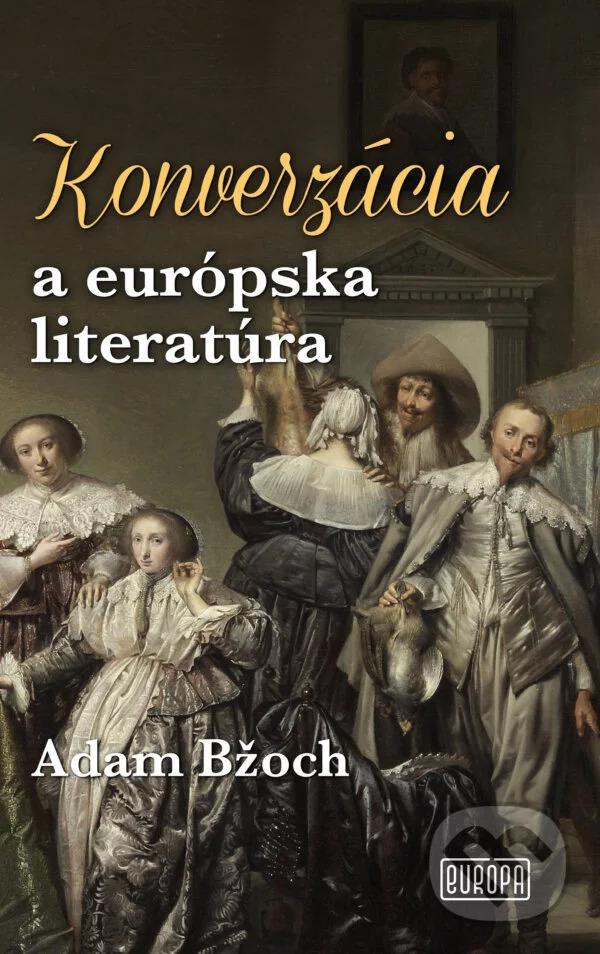


I’ve recently started working on my new translation project, one that I can call a true curiosity, an academic delicacy: Adam Bžoch’s Konverzácia a európska literatúra (Conversation and European Literature). For my colleagues concerned with literary research, the author needs no introduction: a well-known figure of Slovak academic and cultural life, Adam Bžoch is a senior research fellow at the Institute of World Literature of the SAS and a professor at the University of Trnava. Among his wide-ranging scholarly pursuits, major topics of research have included Walter Benjamin’s aesthetics, the prominent authors and works of Dutch literature and culture, and the Slovakian history of psychoanalysis, in addition to his work as a critic of contemporary literature. His latest work, published in 2023, is especially exciting as it maps out a field that has been little researched in Hungary and Slovakia both: the cultural history of conversation, from the Renaissance to the 19th century, examining canonical works of European literature from Marguerite de Navarre’s Heptameron, through Erasmus and both better and lesser known works of the French Enlightenment, to Tolstoy and Dostoyevsky’s novels, as well as the most important works of 19th century Czech and Slovak literature. Bžoch’s research, however, doesn’t only involve high literature: it also offers a taste of the conversational practices of 18th century French aristocratic salons and of German and Dutch citizens, and finally, it also reviews pedagogical literature and books on etiquette. In following the historical changes to this particular form of communication, Bžoch ultimately examines a fundamental cohesive element of human coexistence. A further virtue of the book lies in the fact that it fulfills the demands of academic rigor while remaining thoroughly engaging – though its translation will prove a challenge given its quotes from multiple languages and cultures, as well as its nearly one thousand footnotes.